
Your House Works Overtime for the Holidays. Here's What the Pros Check.
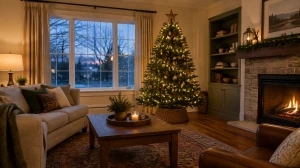
Holiday Home Energy Efficiency & Safety Tips
Between now and New Year's, your home is running a marathon. More people, more cooking, more lights, more laundry, more hours with the heat on. Most holiday checklists stop at "buy LED lights" and "water the tree." Those matter, and we'll cover them. But we train the people who test houses for a living, so we want to show you what a building performance professional notices when they walk into a home this time of year.
The short version: your house is a system. The furnace, the water heater, the range hood, the attic hatch, and the twelve relatives in your living room all affect each other. Once you see it that way, saving energy and staying safe start to look like the same job.
What heating will cost this winter
The U.S. Energy Information Administration's 2026–2027 Winter Fuels Outlook estimates average household spending from November through March, based on the main heating fuel:
- Heating oil: about $2,115, up 21% from last winter
- Electricity: about $1,196, up 4%
- Propane: about $1,246, down 3%
- Natural gas: about $640, down 9%
These are national averages, and they include the fuel's other uses in the home, not just space heating. Your bill depends on your climate, your house, and your habits. That last part is where you have some control. The EIA outlook has the regional breakdown.
Think like an energy auditor
Seal the top of the house first
Most people chase drafts at the front door because that's where they feel them. A pro looks up. Warm air rises and escapes through gaps in the top of the house: the attic hatch, recessed lights, plumbing and wiring holes, the gap around the chimney. As it leaves, it pulls cold air in through the lower levels. That's called the stack effect, and it's why the draft you feel at the door is often caused by a leak you can't see in the attic.

- Weatherstrip and insulate the attic hatch or pull-down stairs. A bare plywood hatch is basically a hole in your ceiling.
- Look for gaps where pipes, wires, and ducts pass into the attic or crawlspace. Small gaps can take caulk. Larger ones can take foam rated for the job.
- Then handle the doors: weatherstripping on the sides and top, a door sweep at the bottom.
- Keep sealing products away from flues, chimneys, and recessed lights that aren't rated for contact with insulation. These need fire-rated materials and proper clearance. When in doubt, ask a pro.

The holiday hazard almost nobody talks about
Picture this. It's Thanksgiving, and there are 14 people in the house. The turkey has been roasting since 7 a.m. Someone turns the range hood on high because the gravy is smoking. Upstairs, your sister-in-law is on her second shower, bathroom fan running. Your teenager just started the dryer with a load of guest towels. The windows are shut tight because it's 34 degrees outside.
Every one of those fans pushes air out of the house. That air has to be replaced from somewhere, and the easiest path might be straight down the flue of your gas water heater in the basement. When that happens, the exhaust that should be going up the chimney, including carbon monoxide, spills into the house instead. Nobody notices. Uncle Ray says he's getting a headache and blames the wine.
Here's the thing: a headache is often the first sign of carbon monoxide exposure. So are dizziness, nausea, and feeling tired. They're easy to blame on a long day, a big meal, or one too many glasses of wine. If several people in the house feel off at the same time, especially if they feel better after stepping outside, treat it as a CO problem until you know it isn't. Get everyone outside and call 911.
This is called backdrafting. It's quiet, it's invisible, and the conditions for it are never better than during a big holiday gathering.

Testing for this is a core part of BPI combustion safety training. Professionals depressurize the house on purpose to see if fuel-burning appliances still vent correctly. You can't run that test at home, but you can lower the risk:
- If you have gas, propane, or oil appliances, crack a window near the kitchen when the range hood and dryer are running at the same time.
- Watch for warning signs: soot or scorch marks near the top of the water heater, rust on the vent pipe, or a stuffy, exhaust-like smell in the utility area.
- Have a CO alarm on every level and near sleeping areas, and test it before guests arrive.
- If anything seems off, have a qualified professional do a combustion safety test.
Don't self-clean the oven the day before Thanksgiving
It's tempting. But the self-clean cycle runs very hot for hours, can smoke up the house, can produce carbon monoxide, and is a common time for older ovens to fail. If you need a clean oven, run the cycle a week or two early, with the hood on and a window open. Or wipe it down by hand and call it good.
A full house is a humid house
People breathe out moisture. So do pots of boiling potatoes and hot showers. With a full house, you may see fog on the windows or water on the sills. A little is normal. A lot, for days, can mean mold later.
- Run bathroom fans during showers and for 20 minutes or so afterward.
- Use the range hood when cooking, and keep its filter clean.
- Wipe up heavy window condensation instead of letting it soak into the frames.
Smart savings that actually add up
Heating and comfort
- Turn the thermostat down a few degrees when the house fills up. A room full of people and a hot oven make plenty of heat on their own.
- Heat pump owners, go easy on big setbacks. When you crank the temperature back up, many systems kick on electric backup heat, which costs a lot more to run. Smaller adjustments are usually better.
- Change the furnace filter now. A clogged filter makes the blower work harder and can cause the system to overheat and shut down at the worst possible time.
- Keep vents, returns, and radiators clear of furniture, curtains, and piles of gifts.
- Open south-facing curtains on sunny days and close them at night.
Lights and electronics
- Use LED holiday lights. They use a fraction of the energy of incandescent strings and run much cooler, which also lowers fire risk.
- Put lights on a timer or smart plug so they aren't running at 3 a.m.
- Use a smart power strip for the TV, game consoles, and streaming gear.

Kitchen, dishes, and laundry
- Run the dishwasher and washer only with full loads. Wash in cold water when the fabric allows.
- Clean the dryer lint screen every load. Extra guest linens mean extra lint, and lint is one of the leading causes of dryer fires. Check that the outside vent flap opens freely.
- Never use the oven or stovetop to heat the house.
- Check the water heater setting. The U.S. Department of Energy's home energy checklist suggests 120°F for many homes. Follow your equipment instructions and your household's needs.
Fire safety: the essentials
Space heaters and heating equipment
Heating equipment causes an estimated average of 37,365 home fires a year, based on 2020–2024 data. Space heaters and heating stoves are involved in nearly half of those fires but about 73% of the deaths, according to the National Fire Protection Association (NFPA).
- Keep anything that can burn at least three feet from furnaces, fireplaces, wood stoves, and space heaters.
- Use space heaters with tip-over and overheat shutoff, on a hard, level surface.
- Plug space heaters directly into a wall outlet. Never use an extension cord or power strip.
- Turn them off when you leave the room or go to bed.
- Have heating equipment and chimneys inspected by a qualified professional.

Outlets, cords, and holiday lights
- Plug only one heat-producing appliance into an outlet at a time. That includes the space heater, the slow cooker, and the electric roaster.
- Inspect light strings for frayed wires and cracked sockets. Toss damaged ones.
- Follow the manufacturer's limit on how many strings you can connect, and don't daisy-chain power strips or extension cords.
- Keep cords out of walkways and never run them under rugs.
- A warm or discolored outlet, a breaker that keeps tripping, or a burning smell means stop and call an electrician.
Trees, candles, and fireplaces
- Water a live tree every day, keep it three feet from heat sources, and don't let it block an exit.
- Never leave a candle burning in an empty room. Battery candles look better than they used to.
- Keep a screen on the fireplace, and never leave a fire unattended.
The U.S. Fire Administration's holiday fire-safety guidance has more.
Kitchen safety
Thanksgiving is the peak day of the year for home cooking fires. Stay close to the stove.
- Stay in the kitchen while anything is on the stovetop. Use a timer for everything else.
- Turn pot handles toward the back, keep a lid nearby, and keep kids and pets out of the cooking zone.
- For a small grease fire, turn off the burner and slide a lid over the pan. Never use water.
- Thinking about frying a turkey? Do it outside, far from the house, on a level surface, with a fully thawed bird.
Generators and carbon monoxide
Never run a generator indoors, in a garage, or near a window or door. If a CO alarm sounds, get everyone outside and call 911.
Traveling for the holidays?
An empty house in winter has its own risks.
- Don't turn the heat off. Set it no lower than about 55°F to protect pipes.
- Open cabinet doors under sinks on exterior walls so warm air reaches the plumbing.
- Know where your main water shutoff is. If a pipe bursts, that's the first thing anyone will need.
- Unplug the tree, lights, and anything that doesn't need to run.
Five-minute walkthrough before guests arrive

- Exits and hallways are clear.
- Space heaters, fireplaces, and candles have three feet of clearance.
- Cords are in good shape and not under rugs or across walkways.
- The tree is watered and not blocking a door.
- Smoke and CO alarms work.
- Furnace filter is fresh and vents are clear.
- The dryer lint screen is clean.
- Guests know how to get out.
Some people do this for a living. You could too.
Everything above, from the stack effect to backdrafting to the dryer vent, is what building performance professionals check every day. They use blower doors, combustion analyzers, and infrared cameras to find problems homeowners can't see, and then they fix them. It's skilled work, it's in demand, and it makes real homes safer and cheaper to run.
If you work in construction, HVAC, home inspection, or weatherization, Green Training USA can help you build those skills and the credentials to back them up. Explore our BPI certification and exam prep, RESNET HERS Rater training, and continuing education for energy professionals. All online, all at your pace, and taught by people who know what happens in the field.
Happy holidays from all of us at Green Training USA. Stay warm, stay safe, and go check that attic hatch.

Contact Green Training USA
Green Training USA
Phone: 1-800-518-1877
Email: support@GreenTrainingUSA.com
Mail: PO BOX 4225, West McLean, VA 22103
Website: www.greentrainingusa.com
